Pet First-Aid Cheat Sheet: Your Emergency Guide
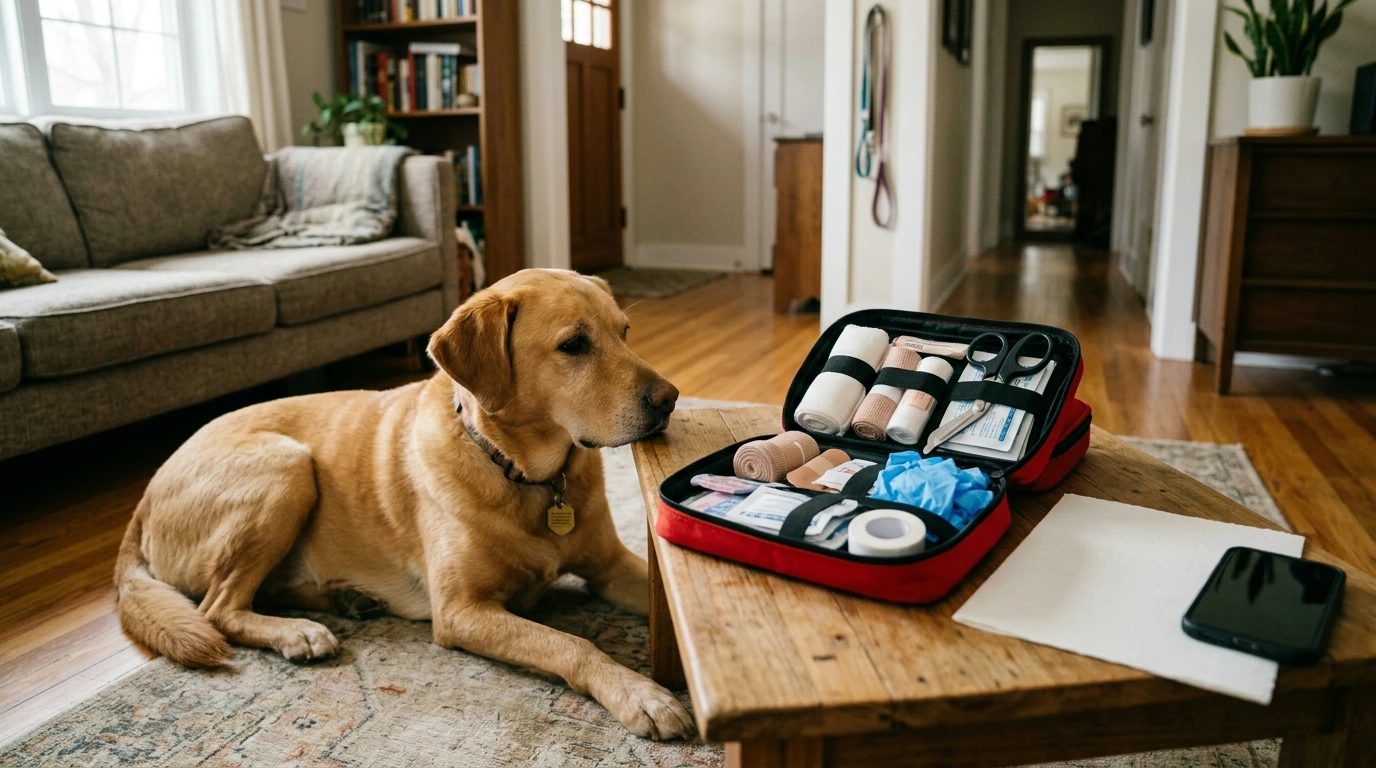
A pet emergency can be frightening, but a little preparation can make the next steps easier to navigate. Knowing whom to call, where to find supplies, and how to reach an emergency clinic can help you focus when every minute feels important.
Our printable cheat sheet is a handy reference to keep with your emergency supplies—not a substitute for veterinary care. If your pet is seriously hurt or suddenly ill, contact a veterinarian or emergency clinic promptly and follow their instructions.
Why Keep a Pet First-Aid Guide Handy?
When a pet is in distress, it can be difficult to remember phone numbers or decide what to do first. A printed reference gives you something to reach for even if your phone battery is low or another caregiver is looking after your pet. It can also help you organize your preparations before an emergency happens.
Our Must-Know Pet First-Aid Cheat Sheet is designed as a quick reference for pet owners. Keep it alongside your veterinary contact information so the people caring for your pet can find both without searching.
A guide cannot examine your pet or determine how serious a symptom is. Trouble breathing, collapse, severe bleeding, and other urgent signs call for prompt veterinary help. When in doubt, call your veterinarian or an emergency clinic for advice.
Prepare Before an Emergency
Choose an easy-to-find spot for your guide and tell everyone who cares for your pet where it is. A family member, pet sitter, or neighbor may need to act while you are away. You can also discuss who will call the clinic and who can help with transportation.
Write down these contacts and keep them with your guide:
- Your regular veterinarian’s phone number and address.
- The nearest emergency veterinary clinic’s phone number and address.
- A pet poison control contact, such as the ASPCA Animal Poison Control Center.
- A trusted person who can help transport or care for your pet if needed.
Keep a pet first-aid kit accessible, too. Ask your veterinarian which supplies are appropriate for your pet and how to use them. Check the kit periodically, replace used or expired items, and keep any medications secured. The American Veterinary Medical Association’s pet first-aid resource offers additional preparation guidance.
It is also helpful to keep your pet’s medical information together, including current medications and relevant health conditions. Having it ready can make it easier to share details with a clinic that has not treated your pet before.
Know When to Call for Help
Use the table below for quick orientation, not as a diagnosis or treatment guide. Call a veterinarian or emergency clinic immediately for serious symptoms, and follow the veterinary team’s instructions while you arrange care.
| Situation | First step |
|---|---|
| Trouble breathing or collapse | Contact an emergency veterinarian immediately and arrange urgent care. |
| Heavy bleeding or serious injury | Call an emergency veterinarian and follow their instructions while arranging transport. |
| Possible poisoning | Contact a veterinarian or pet poison control promptly; keep the substance or packaging available. |
| Seizure | Keep your pet away from hazards without putting your hands near their mouth; contact a veterinarian. |
If you suspect poisoning, do not induce vomiting or give medication unless a veterinary professional instructs you to do so. Have the packaging available and be ready to describe what your pet may have encountered, how much, and when. If you are unsure of any detail, share what you do know rather than delaying the call.
For any emergency, call ahead when possible so the clinic can advise you and prepare for your arrival. Handle an injured pet carefully: pain and fear can make even a normally gentle animal react unpredictably. Follow the clinic’s directions for moving and transporting your pet.
Put the Printable Guide to Work
Keep one copy near your first-aid kit and another with your pet travel supplies. If your pet regularly stays with a sitter or travels with family, show those caregivers where to find the guide and emergency contacts before they need them.
Review the phone numbers and route to the nearest emergency clinic periodically. Clinic hours and services can change, so it is worth confirming your plan ahead of time. If you move or travel with your pet, identify an emergency clinic near your new location or destination.
Our Must-Know Pet First-Aid Cheat Sheet is $7.99 and can be one part of a broader plan that includes professional advice, accessible supplies, and reliable contacts.
Preparing can also include taking care of yourself outside an emergency. If you want a separate resource for practicing relaxation, explore our Calm Your Mind guided meditation series. It is not an emergency tool, but it offers an option for making time for yourself during everyday life.
FAQ
Can a pet first-aid cheat sheet replace a veterinarian?
No. A cheat sheet is a preparedness reference; a veterinarian provides diagnosis and treatment.
What should I do if my pet may have eaten something toxic?
Contact a veterinarian or pet poison control promptly and have the packaging available. Do not induce vomiting or give medication unless a veterinary professional instructs you to do so.
Where should I keep a printable pet emergency guide?
Keep it somewhere accessible, such as near your pet first-aid kit, and consider another copy with your travel supplies. Make sure your pet’s other caregivers know where to find it.















Leave a comment